Categories
Los Angeles Multifamily

Just Closed – 1540 S. Orange Grove | 8 Units

Mid-City Los Angeles Continues to Stay Hot

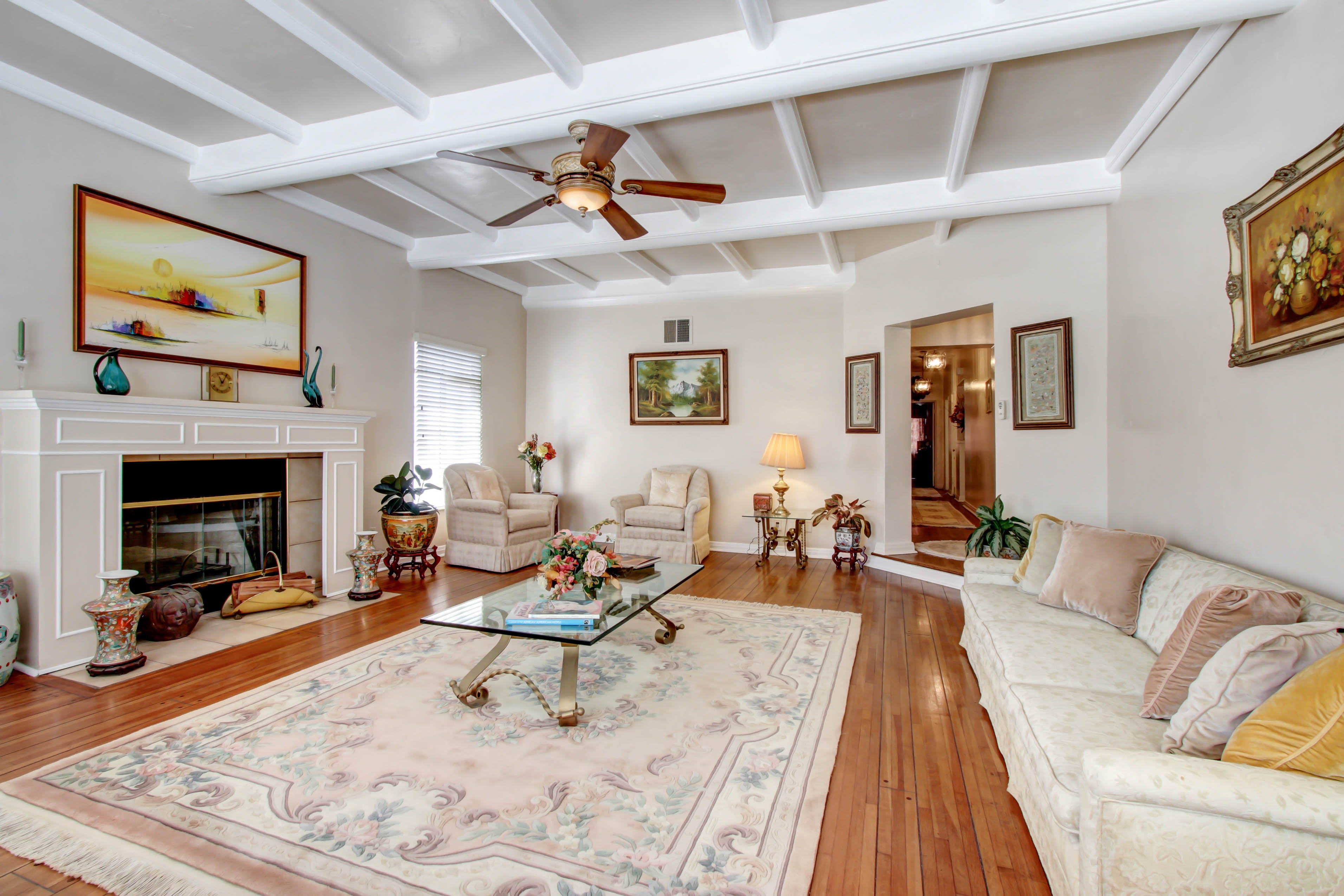
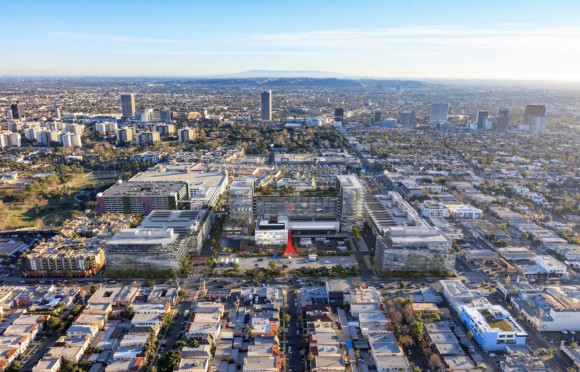
Congratulations to the Buyer and Seller of this incredibly well-located 8 unit value-add property located in the heart of Mid-City Los Angeles’ Picfair Village (near the intersection of Pico and Fairfax). This pocket of Mid-City continues to stay strong in terms of multifamily investment sales and overall rental demand. Renovated 1960s-vintage one-bedrooms can easily achieve $2,000+/mo and two-bedrooms $2,800+/mo. For this property – there was approximately 45% upside in rents from current to market.

The Seller, as is the case with many local Sellers, was a generational owner who was fatigued by the ongoing stricter rent control laws and overall government regulation that is typical in the Los Angeles apartment business. They had recently allocated significant capital expenditures towards the completion of their mandatory seismic retrofit – a mandate bestowed on about 15,000 other local LA property owners who own 1960s properties with tuck-under parking spaces).

The marketing of this property saw a competitive process with multiple offers generated for the Seller, and ultimately went to a Buyer with an extensive real estate background. The Buyer was attracted to the overall growth of the area, which includes a 28-Unit new construction project on the two adjacent parcels. Among other things, he plans on immediately renovating the two vacant units – as well as building two additional Accessory Dwelling Units (ADUs) in the tuck-under garage spaces to generate additional income. The purchaser utilized short-term bridge financing to acquire the property.

Transaction Details:

  • $2,200,000 Sale Price
  • $275,000/Unit
  • $364/SF
  • One 2-Bedroom and one Bachelor unit Vacant at closing
  • Financed with private bridge loan
  • 45 day total Escrow
Categories
Los Angeles Multifamily

I.D.E.A.L. Benefits of Real Estate Investing

Among the many benefits of real estate investments are Income, Depreciation, Equity, Appreciation and Leverage.

One thing for certain in real estate investing is that different investors have different investment criteria in terms of what they are looking for in a real estate investment. There are investors that buy for cash flow. There are investors that are looking to park money for appreciation and bank on rent growth. There are investors that are looking to buy, renovate and quickly flip out of that investment.

If you are starting out, a great (and simple) place to start when evaluating the benefits of real estate investing is to refer to the old real estate acronym I.D.E.A.L.

Income

If you are buying investment property, at the very least that investment should produce some income in the way of cash flow. On a very basic level, here is how that works. Let’s take the following example for a multifamily property.

$1,000,000 Purchase Price
$80,000 Annual Gross Rents
($32,000) Annual Expenses

$48,000 Net Operating Income
($36,000) Annual Mortgage Payments

$12,000 Annual Cash Flow. Assuming you put down 30% and financed 70% that is about a 4% cash-on-cash return.

Depreciation

Real estate has many incredible tax benefits, but one of the best tax benefits is depreciation. Simply put, depreciation is a non-cash expense (effectively a tax shield) whereby an investor can shield from taxes most or even all of the rental income generated by this particular real estate investment.

Depreciation allows investors to spread out most of the cost of real estate purchases over a period of 27.5 years (for residential buildings). If you own a multifamily property and you have been utilizing the depreciation tax shield for over 27.5 years, you may consider selling as you will likely be paying significant taxes on your rental income. Once your property is fully depreciated, it may be tax-inefficient to own this particular investment property.

Equity

As you continue to make mortgage payments towards your investment property, you will continue to pay down the principal balance of your loan. As a result, the longer you own investment property, the more equity you will continue to accumulate both from the principal reduction and appreciation of the property itself.

Appreciation

Over the long run, real estate prices and rent tend to appreciate (i.e. increase in value) at a rate somewhat akin to inflation (~3-4% per year) – sometimes greater in core markets like Los Angeles. This is known as passive appreciation. And while it might not sound like much, when combined with the other benefits and when compounded over long periods, passive appreciation can build enormous wealth.

On the other side of the appreciation coin, is active appreciation. Active appreciation is achieved by actively putting a plan in place to increase the value of your property. In Los Angeles, and in particular with Rent-Controlled properties, this may come in the form of offering cash-for-keys (aka tenant buyouts) for lower paying tenants. Once those units are vacated, many investors will allocate capital towards renovating these units in order to achieve at or above market rents.

Leverage

Most real estate transactions are acquired using leverage (or loans). The power of leverage cannot be understated in real estate. Taking the example above, you can put 30% down and control a $1M asset. Leverage can significantly amplify the returns on your cash invested. But on the flipside, leverage can also magnify your losses significantly should the market go south.

Categories
Uncategorized

5 Tips on Real Estate Depreciation from a CPA

I received an interesting email regarding Real Estate depreciation from Karen Yu, who is an active CPA and works with a multitude of real estate investors.

When you buy real property (or personal property that lasts more than one year) to use in your business, you may have up to three options for deducting the cost:

  • Regular depreciation
  • Bonus depreciation
  • IRC Section 179 expensing (technically, depreciation in advance)

Regular depreciation takes several years.

Bonus depreciation allows you, through 2022, to deduct 100% of the cost of personal property in one year.

IRC Section 179 expensing allows you to deduct up to $1,050,000 of the cost of personal property.

Here are five tips to note:

  1. To claim depreciation, you must place the property in service in an active trade or business.
  2. A business begins when it is functioning as a going concern—sales and revenue are not required.
  3. Depreciation for business property purchased for an active business begins only when the property is placed in service in the business—in other words, it is available for use in the business.
  4. First-year regular depreciation for personal property begins either on July 1 (half-year convention) or at the midpoint of the quarter in which it is placed in service (mid-quarter convention).
  5. First-year depreciation for real property depreciation begins at the middle of the month during which the property is placed in service (mid-month convention).

It should be noted that I, myself, am not a CPA nor am I offering tax advice with this post.

Categories
Accessory Dwelling Units Los Angeles Multifamily

California Housing Bills SB 9 and SB 10 Explained

Duplex Zoning Coming to a Single Family Neighborhood Near You

CA Governor Gavin Newsom this week signed a pair of bills into law that effectively put an end to traditional single-family zoning restrictions in most neighborhoods statewide.

Senate Bills 9 and 10, which take effect Jan. 1, 2022, will make it easier for Californians to build more than one housing unit on many properties that for decades have been reserved exclusively for single-family homes and will give cities greater flexibility to place small apartment complexes in neighborhoods near public transit.

Although the laws represent two new approaches toward alleviating the state’s housing crisis, experts say neither is likely to produce the number of units needed to fully resolve it.

Here are answers to some questions you may have about these new laws.

What is Senate Bill 9?

Senate Bill 9 is the most controversial of the two new laws. It allows property owners to split a single-family lot into two lots, add a second home to their lot or split their lot into two and place duplexes on each. The last option would create four housing units on a property currently limited to a single-family house.

The new law will mark a shift from current policies that allow only two large units — a stand-alone house and an accessory dwelling unit — on single-family lots, as well as an attached junior unit no larger than 500 square feet.

Under the new law, cities and counties across California will be required to approve development proposals that meet specified size and design standards.

What are the caveats?

The law is designed to create additional housing while also preserving low-income, affordable units.

A proposed project under this new law cannot result in the demolition or alteration of affordable or rent-controlled housing or market-rate housing that has been occupied by a tenant in the past three years. Properties listed as historic landmarks or those located within a historic district are off-limits for new development. Wetlands, farmland and properties at high risk of fire or flooding are also exempt.

If someone chooses to split their property in two, each new lot must be at least 1,200 square feet, according to the new law.

Any unit created as a result of the law cannot be used for short-term rentals. They must be rented for a term longer than 30 days.

Who can do this?

Homeowners or landlords can apply to upzone their properties through their local jurisdiction, but only if they plan to live on the property for a while.

Property owners must sign an affidavit stating they will occupy one of the housing units as their primary residence for at least three years after splitting their property or adding additional units.

Does this law allow for offices and new housing units on single-family properties?

No. Any new units created under SB 9 must only be used for residential purposes.

Do cities and counties have to abide by this new law?

Under SB 9, local government officials may only deny a development application if they find that the proposed project would have a “specific, adverse impact” on “public health and safety or the physical environment” and there are no feasible and satisfactory mitigation options.

Will local rules about maximum square footage, building height and parking apply?

Proposals under this new law must adhere to objective zoning and design review standards established by local cities and counties. Developments must still follow local zoning rules such as those governing height and yard size requirements.

No parking is required for additional units if the property is within a half-mile of a major public transit stop. However, a local agency can require up to one parking space per unit if there are no frequent transit stops nearby.

Will this law put a dent in California’s housing shortage?

A recent study by the Terner Center for Housing Innovation at UC Berkeley estimated that just 5.4% of the state’s current single-family lots has the potential to be developed under SB 9, making construction of up to 714,000 new housing units financially feasible. That’s only a fraction of the 3.5 million new housing units Gov. Newsom wants to see built by 2025.

What is Senate Bill 10? 

Senate Bill 10 eases the process for local governments to rezone neighborhoods near mass transit or in urban areas to increase density with apartment complexes of up to 10 units per property. The new legislation also allows cities to bypass lengthy review requirements under the California Environmental Quality Act in an attempt to help reduce costs and the time it takes for projects to be approved.

Originally authored by Maggie Angst of Mercury News on September 17, 2021

Categories
Los Angeles Multifamily

Why I love Highland Park, Los Angeles

A lifelong Westsider moves to the Eastside.

I finally did it.  As of February 2021, I moved to North East Los Angeles or “NELA” as the cool kids call it.  You can officially call me an Eastsider.  Specifically, I moved to Highland Park.  If you are in the real estate world locally, you have probably seen deals in Highland Park – or at least you have heard of the area.  And if you already own property in the area, you might be thinking that it is already too late to be buying in Highland Park, let alone writing this post.  But for those that don’t know, Highland Park is an old part of Los Angeles. In fact, it’s among the oldest – one of the very first subdivisions of Los Angeles to be exact. It is located just West of Pasadena, adjacent to Eagle Rock and just north of DTLA.  I spent virtually my entire life on the Westside of Los Angeles. Living east of the 405 was a foreign concept to me. But when it came time to purchase a home, staying on the Westside and paying $2 Million for a 2-Bedroom teardown simply wasn’t an option, so my fiance and I packed up from the Westside and headed East.


Now that I’m here, I can honestly say that I love Highland Park.  Here’s why….


1) Highland Park is Very Accessible 

Highland Park is very accessible to areas such as Pasadena, Glendale, Downtown Los Angeles and the San Gabriel Valley.  I never thought I would hear myself say what a benefit it is to live close to Pasadena, but the fact is that Pasadena is absolutely stunning and has every major high-end retailer you would find in any foremost part of Los Angeles.  From a transportation standpoint, Highland Park is serviced by three freeways (the 110, 134 and the 2 which takes you directly into Echo Park/Silverlake).  The L.A. Metro Gold Line has a station just north of Figueroa Street, and can get commuters downtown in about 35 minutes. My place is approximately a 7 minute drive to Dodger Stadium with no traffic.  


2) The Restaurants and Bars are Amazing in Highland Park 

Drive through Highland Park and you will find some of the best and most unique restaurants and bars in all of Los Angeles.  There are very few chain operators in Highland Park.  Instead you will find spots like Hippo, Homestate, Joy, Donut Friend, Goldburger, Pocha, Gold Line, Good Housekeeping and so many others.  The entire area feels uniquely homegrown and very entrepreneurial.  


3) The Real Estate is Unique And Getting Better by the Day 

From a multifamily standpoint, Highland Park is not the biggest market, but if you own a multifamily property in the area, you can achieve very attractive rents.  For properties 5+ units, there are less than 500 properties in the entire zip code of 90042 totaling just shy of 6,000 apartment dwelling units.  Most of these properties were constructed prior to 1960 – in other words, the housing stock is old.  That said, the average rent for a one-bedroom in Highland Park now is $1,873.  By way of comparison, I am leasing a small renovated one-bedroom in West Los Angeles for $1,895.  A multitude of historic restrictions make it tough to develop in Highland Park, but if you are turning an old multifamily property, you can expect to get very high rents.  From a Single Family Residential standpoint, new homebuyers in Highland Park are folks who are generally priced out of areas like Silver Lake and Echo Park (or in my case, The Westside). It is not uncommon for houses to go for as high as $800 per square foot – which is comparable to some houses you would find in areas like Sherman Oaks, Culver City or Mar Vista.  From a retail standpoint, the main streets in Highland Park (particularly Figueroa and York) are teeming with very cool independent shops and restaurants.  It feels like you are walking down Rose or Abbot Kinney in Venice, although Highland Park seems to have less of a homelessness issue.

4) The People Are Great

The Highland Park crowd is an incredibly diverse mix of established locals and newer transplants alike. There is a strong sense of community and generally speaking people do not seem to take themselves too seriously. You can come as you are and you can be yourself.

Long story short, Highland Park is clearly no secret at this point. Simply put, it is an incredible Eastside Los Angeles submarket where from an investment property standpoint, you can achieve rental rates that are comparable to other high-rent areas around town.  Where Highland Park goes from here, only time will tell.  But I have a feeling that direction is up.

Categories
1031 Exchange Los Angeles Multifamily

Mid City LA 8-Unit Sells to All Cash 1031 Exchange Buyer

8 Units Closed in Up-and-Coming Mid-City Los Angeles

We recently represented both the Buyer and Seller of 4606 St. Charles Avenue. Los Angeles, CA 90019. This was an off-market transaction sold by a long-term family owner on the Seller-side to a 1031 Exchange Purchaser. The value-add property consisted of 8 units constructed in the early 1960s located in the heart of Mid-City Los Angeles nestled in between Washington Blvd and Venice Blvd just east of La Brea, which is a very up-and-coming rental submarket.

I have always been a big fan of this particular pocket of Mid-City Los Angeles for many reasons, not the least of which is the location. It is close to major arteries (in this case La Brea, Washington and Venice) and is a short distance to the 10 Freeway and Expo Line which bridges Santa Monica to DTLA. In the immediate surrounding area of this property you will find numerous multifamily properties which have been vastly improved by value-add investors, as well as a spate of newly constructed units and small-lot subdivisions either recently completed or under construction, which target a tenant-base consisting of highly qualified renters who are priced out of areas to the north and west like Mid-Wilshire, Beverly Grove, Culver City, Palms and Pico Robertson.

The purchaser was a local investor who owns a few similar properties locally and was looking to reinvest the proceeds from a sale of another property via a 1031 tax-deferred exchange. 1031 Exchange laws are such that an exchange Buyer has to transact within a certain timeframe or risk paying what could be tremendous capital gains taxes on the gains from the property that they sold. The purchaser plans to slowly renovate the units as tenancies turn and hold long term.

Transaction Details

  • $1,775,000 Sale Price
  • 8 Units
  • 6,508 SF
  • $221,000/Unit
  • $272/SF
  • One 2-Bedroom vacancy at closing
  • All Cash Transaction
  • 21 day total Escrow

See additional photos below:

Categories
Los Angeles Multifamily

Closed Transaction – 1264 South Spaulding Avenue. 6 Units

6 Units Closed in Wilshire Vista

We recently represented a Seller of 1264 S. Spaulding.  Los Angeles, CA 90019,  a 6-unit property located in the coveted Wilshire Vista neighborhood of Los Angeles, which is East of Fairfax, North of Pico Boulevard, around San Vicente Boulevard.  I like the Wilshire Vista area for many reasons.  At the forefront of those reasons is the overall aesthetic and charm of the surrounding neighborhood. The tree-lined streets in the immediate vicinity (Orange Grove Ave, Genesee, Ogden, Stanley etc) are very single-family residential (SFR) in nature. This area is not densely populated with apartments, so if you own a multifamily building in this area, there is not a lot of competition in the neighborhood when it comes time to lease units.  

The unit mix of 1264 S. Spaulding consisted of all one-bedroom floor plans averaging close to 1,000 SF per unit – each unit with a dining room which is a characteristic indicative of 1930s construction, which is when this particular property was built.   The Buyer, who is a local family office with close to 1,000 units under management, plans to potentially convert these one-bedroom units into two-bedroom units – the thought process being that a one-bedroom unit in this area could fetch about $2,000/month whereas a two-bedroom unit could fetch closer to $2,700 – $3,000.  This small incremental difference in monthly (and annual) rent ends up amounting to major dollars when it comes time for the property to be valued for either a sale or a refinance.  In addition to these conversions, the Buyer plans to construct and Accessory Dwelling Unit (ADU) in the parking garage thereby creating an additional unit and income for the property.

While in fairly good condition, this property was un-renovated and lacked most of the features that today’s renter is looking for. The Buyer was attracted to the quality of the neighborhood and the fact that the building was delivered with 3 vacancies allowing them to go to work immediately on renovating those units without having to deal with existing tenancies.

The Seller was a long-term owner/operator who like many property owners was fatigued by anti-landlord legislation in California and Los Angeles and figured it was time to move on, a story that I hear quite frequently in the LA multifamily market.

Transaction Details:

  • $2,000,000 Sale Price
  • 6 Units
  • 5,794 SF
  • $333,333/Unit
  • $345/SF

View additional photos of 1264 S. Spaulding below: 

Categories
1031 Exchange Biden Tax Plan

The Biden Tax Plan and Its Effects on Real Estate

In the multifamily investment sales space, I deal with many families in the private capital arena – small property owners who own anywhere from one to five real estate assets, many of which they have owned for many years. Usually the story goes: matriarch/patriarch purchased an investment property in the 1980s for let’s say $500,000 which is now today worth let’s say $2,500,000.

If and when these folks decide to sell, there are a few paths that they can take. They can utilize a 1031 Exchange, allowing them to sell their property and purchase another with the proceeds of the sale to avoid paying capital gains taxes (on what would be approximately $2,000,000 of gains given the example above). Others do not sell and leave the property to their heirs when they pass away allowing the heirs to utilize the “step up in basis” loophole where they are able to sell the property with little to no capital gains exposure. And then there are some long term owners just bite the bullet, sell their property and actually pay the capital gains taxes. Virtually all of these options are at risk with Biden’s new tax proposal.

1031 Exchanges At Risk

The Biden plan would eliminate the ability to conduct an exchange when capital gains are greater than $500,000. For the example above, that family would not be able to utilize the 1031 Exchange tax loophole allowing them to defer their capital gains taxes by purchasing a replacement property.

Elimination of the “Step Up in Basis”

The Biden administration has called for ending the ability to “step up” the cost basis for real-estate when it is inherited. The stepping up allows heirs to calculate capital gains on the sale of property using the market value at the time they inherited it, rather than when it was originally purchased. Stepping-up the basis can reduce the tax burden for heirs considerably under these circumstances.

Increase in Capital Gains Rate

Perhaps the most critical component of Biden’s tax proposal is the increase of the tax rate on capital gains for households making over $1 million. The plan proposes raising the rate to 39.6% for, up from 20% where it current stands for the country’s top earners.

All in all, these components of Biden’s tax proposal would not be good for real estate owners.

Categories
Los Angeles Multifamily

Beware of ‘Cap Rates’ as advertised

If you have seen an advertisement for an investment property, chances are you have come across a term called a “Cap Rate.” Simply put, a Cap Rate is an annual return on a real estate investment without taking your loan payments into consideration. It is arguably one of the most common metrics that real estate investors use when evaluating a small (or large) real estate investment.

A very basic example of how a Cap Rate is calculated is as follows on a $1,300,000 Purchase of an Investment Property:

$100,000 Gross Rents Annually

($35,000) Expenses Annually

$65,000 Net Operating Income (Gross Rents Minus Annual Expenses)

5.0% Cap Rate (Net Operating Income/Purchase Price)

Seems easy enough, right? Be careful. One of the problems with evaluating a multifamily investment strictly on Cap Rate is that Cap Rates can be manipulated simply by manipulating expenses. Take the example above for instance – let’s say whoever is advertising this deal published “Utility” expenses that were $10,000 less than they actually were on an annual basis. That would make the annual expenses for this deal $45,000 (instead of $35,000) and thus make the Cap Rate 4.2% instead of 5.0%. By way of comparison, the “Price per Unit” metric cannot be manipulated – that is simply the purchase price divided by the number of units.

A common mistake that some folks make when calculating a Cap Rate (at least in LA) is not accounting for reassessed property taxes for the Buyer. A Buyer who is purchasing a property from a Seller who has owned the property for 30 years is going to pay vastly more property taxes than what the Seller was paying – because in LA County, property taxes are assessed at roughly 1.25% of the Purchase Price upon sale. Property taxes can account for as much as 50% of a Buyer’s total annual expenses. So whatever amount the Seller was paying for property taxes is virtually meaningless to the Buyer. Some do not account for this adjustment and use the Seller’s current property taxes in their underwriting which can swing a Cap Rate astronomically and ultimately be very misleading.

While a Cap Rate is certainly an important metric, you should be wary of relying on the cap rate that is advertised.

Categories
Los Angeles Multifamily

Stunning Features of the Los Angeles Spanish Duplex

Simply put, Los Angeles is home to some of the most stunning duplexes that exist.  Whether you are in Los Angeles, Beverly Hills, West Hollywood, Carthay or West Adams you are bound to come across the multiple styles of stunning duplexes the city has to offer.  Perhaps the most coveted is the two-story, stucco, red-tiled roof with an upstairs and downstairs unit.  These structures were originally designed to mimic single family homes largely to accommodate population growth in LA.

We are currently marketing 1087 S. Genesee Avenue. Los Angeles, CA 90019 – a gorgeous 1930s built Spanish Revival Style Duplex.  These types of duplexes can be found in select pockets of Los Angeles (this one in the heart of Wilshire Vista).  The unique design sensibilities of this duplex include features like a red-tiled roof, exterior stairways, verandas, decorative edging around windows, and stunning archways throughout.

Many tenants in the market for rental housing love the charm and design features of units such as these, many of which are large in nature – this one boasts units which are 2,000 SF each, the upper unit of which will be delivered vacant.  Would-be homebuyers like them for the owner-occupancy potential…live in one and rent out the other to subsidize the mortgage.  Either way, their beauty is undeniable. 

1087 S. Genesee Avenue. Los Angeles, CA 90019

Listed at: $2,095,000
Building Size: 4,136 SF
Unit Mix: Two Units – Each 3-Bedroom, 2-Bathroom. Delivered with upper unit vacant.

See additional photos below.  Contact me at ewong@greysteel.com for further details.

Categories
1031 Exchange

Selling Your Property to a 1031 Exchange Buyer? What You Should Know.

If you own a multifamily property in Los Angeles, chances are that you have received a call from someone like me saying “I am working with a Buyer who is in a 1031 Exchange who would like to purchase your building.”  While there are certainly benefits to selling your property to an ‘Exchange Buyer’, they are not always the best option.

For those that are new to 1031 Exchanges, they are a tax loophole which allows property owners to sell an investment property and buy a replacement property of equal or greater value with the proceeds of the sale, while completely deferring any capital gains taxes that they otherwise would have had to pay if they did not purchase a replacement property.  There are various other benefits to conducting a 1031 Exchange, which I will save for another time.

A 1031 Exchange Buyer HAS to Buy a Property or Pay Taxes

Perhaps what is most attractive about selling to a 1031 Exchange Buyer is the fact that the Buyer has to purchase a replacement property, because if they do not purchase a replacement property, they will risk paying capital gains taxes on the proceeds of the property that they sold (which depending on the deal can be millions of dollars). 

A 1031 Exchange Buyer is on the Clock to Buy

Not only does an Exchange Buyer have to transact, but they are also under the gun to do so from a timeframe standpoint.  An Exchange Buyer has 45 days from the close of their sale to identify a replacement property and 180 days to close on the purchase of their replacement property.  So to recap, if you have your building on the market with multiple offers and there is an Exchange Buyer at the table, you know that a) the Buyer has to purchase something and b) he/she is on the clock to do so and c) in many instances Exchange Buyers are all cash Buyers.  Sounds good right?

The Catch

The catch is that Exchange Buyer can identify up to 3 separate replacement properties and in some cases more than 3.  As a result, sometimes Exchange Buyers will go into escrow on 3 different replacement properties with the intention of only purchasing one and cancelling escrows on the others.  In addition, what is a pertinent piece of information to know about an Exchange Buyer is where they are in the process of the property they are selling.  Ideally, they have already closed on the sale of that property and are in their 45 day identification window – but this is not always the case.  Many times, Exchange Buyers are still early in the escrow process of their sale and in some cases have not even begun the sale process, in which case they are not even in a position to buy!

All in all, while your ears may perk up when you hear the term ‘Exchange Buyer,’ you must also beware of the risks.

Categories
Development Los Angeles Multifamily

3 Los Angeles Real Estate Developments You Should Know About

Take a look at these 3 major real estate developments happening around town right now. If there is one thing for certain in Los Angeles, it is that the skyline is changing.

The Landmark, Brentwood

The Landmark

  • Developer: Douglas Emmett
  • Type: Multifamily
  • Area: Brentwood
  • Status: Near completion
  • The Deal: 34-story building built on the former Pavillions lot, consisting of 376 apartments – which includes 19 affordable units – above a 1,000-car garage.
Television City Campus – Beverly Grove

TELEVISION CITY CAMPUS

  • Developer: Hackman Capital
  • Type: Office and Studio Space
  • Area: Beverly Grove (Fairfax and Beverly)
  • Status: Planning
  • The Deal: The reimagined 25-acre studio complex will feature more than 1.1 million square feet of new office space and production facilities, The plan also calls for the construction of a new mobility hub, above- and below-ground parking, the implementation of a a transportation demand management program, and public realm improvements along the exterior of the campus.
The Grand – Downtown LA

THE GRAND

  • Developer: Related
  • Type: Multifamily/Hotel
  • Area: Downtown Los Angeles
  • Status: Under Construction
  • The Deal: Two towers (39-story and 20-story) totaling 436 rental apartments which includes 80 units of affordable housing – as well as a 309-room Equinox Hotel.
Categories
Los Angeles Multifamily

Mom & Pop Owners Are Being Squeezed Out of the Apartment Business

Many people have the misconception that owners of Los Angeles Multifamily properties are huge, faceless corporations that will stop at nothing to squeeze tenants for every dollar. The reality is that the Los Angeles multifamily market is largely a small property owners’ market consisting primarily of ‘Mom & Pops’ who have owned and operated their properties for in many cases many decades upon decades. For many reasons, this group of small investors are sadly getting squeezed out of the business entirely. Here are a few reasons why:

Increased Government Regulation
California (and in particular Los Angeles) happens to be one of the most highly-regulated regions when it comes to the business of rental housing. State Bills and Propositions all proposed or passed in the last handful of years such as AB 3088, SB 91, AB 1482, Proposition 10, Proposition 15, Proposition 19 and now AB 854 – all have imposed stricter rent control, moratoriums on evictions, and have created an atmosphere that is largely pro-tenant at the expense of landlords.

Increased Operating Expenses
If you operate a multifamily property in the city of Los Angeles, you have almost certainly experienced a handful of expense increases over the past few years. The RecycleLA program, which created trash pick-up zones and eliminated a property owner’s choice of Trash companies caused waste bills to increase as high as 3x what they originally were. Government-imposed capital expenditures such as seismic retrofitting which can run upwards of $100,000 have forced many owners to sell their properties. Other expenditures imposed by insurance companies on their annual inspections have become all too rampant. The cost to operate for some has just become too high.

Barrier to Entry is Very High
As these smaller owners exit the real estate business, I am seeing less and less actually enter the business to replace them. Instead, smaller owners are being replaced by larger, middle-market and even institutional owners with deep pockets and ample capital to deploy. From a returns standpoint, it’s virtually impossible for a young couple nowadays to purchase a property with a 20% down payment and have that deal actually pencil. Where apartment buildings are priced with respect to their rents today, you would have to come in with a minimum 50% down payment to barely cash flow. On a $2,500,000 it is difficult for an average investor to scrape together $1,250,000 as a down payment. On many of our small listings, the buyers who show up on even a 5-unit deal own 500+ units.

All of these things are forcing ‘Mom and Pops’ to retire out of the business and they are not being replaced by younger ‘Mom and Pops.’ For better or for worse, the multifamily market is slowly but surely shifting towards more institutionalized ownership.

Categories
Los Angeles Multifamily Renovation

Renovation Update from a Multifamily Property We Sold in Mid Los Angeles

A quick renovation update on a 6-unit property we sold last year in Mid Los Angeles.  We delivered the property to the Buyer with 4 of 6 units vacant units.  Generally speaking there are pros and cons to purchasing a rent-controlled property with vacancy such as this.  On the positive side, it allows a Purchaser to begin renovating the units immediately upon closing escrow to achieve at or above market rents without having to deal with existing tenants.  On the negative side, deals with vacancy are generally tougher to finance and many times they are priced with the juice already squeezed out of the deal.

That said the buyer of this property did a fantastic job with their renovations.  They laid down new flooring, installed new European style cabinets with Caesarstone countertops, modern tile backsplashes and stainless steel appliances – most of the attributes that today’s renter pool looks for in a unit.

They are beginning the lease up process asking just under $3,000/month for each of the 4 two-bedroom units – which is top of the market rent for the area.  Upon fully leasing the units, their plan is to refinance their current bridge loan which they used to acquire the property with permanent debt.  All in all this was a solid execution. See before and after photos below:

“Before” Photos

“After” Photos

Categories
LA Soft Story Ordinance

Update: Los Angeles Multifamily Seismic Retrofit Ordinance

In the wake of the 4.0 magnitude earthquake last night in Los Angeles, here are a few recent bullet points pertaining to the LA Seismic Retrofit Ordinance. The ordinance (which was passed in 2015 by the City of Los Angeles) mandated that all “soft story” multifamily properties 3+ units with ‘tuck-under’ parking be earthquake retrofitted to avoid collapsing, as some did in the 1994 Northridge quake.

The photos in this post are from a retrofit taking place at an 8-unit property in West Los Angeles right now. The total cost of this construction was approximately $70,000 to complete.

13,031 Total Soft Story Buildings in Los Angeles

5,813 properties completed seismic retrofits (as of 3/2021)

8,218 properties pending compliance (as of 3/2021)

$52,000 is the average cost for a multifamily owner to retrofit

It should be noted that the City of Los Angeles passed this ordinance which effected multifamily owners without any clear cut options for them to finance the construction work. As a result, many multifamily owners in Los Angeles were forced to pay (in some instances) over $100,000 to comply with the ordinance. Many were forced to sell their properties as a result.

Categories
Accessory Dwelling Units

New Laws Allow Multifamily Owners to Add Units via ADUs (Accessory Dwelling Units)

Several California laws adopted in 2019 to facilitate accessory dwelling units (ADUs) directly benefit multifamily owners. The primary laws of interest are Assembly Bill 68 (Ting)Assembly Bill 881 (Bloom), and Senate Bill 13 (Wieckowski). The three bills overlap significantly and amend California Government Code Section 65852.2. We anticipate that many multifamily owners will be able to quickly create additional units within their existing multifamily projects based on these recent changes.

QUICKER APPROVAL PROCESSING

The biggest opportunity for multifamily owners is found in Government Code Section 65852.2(e), which was expressly amended to provide for the ministerial and administrative (i.e., no CEQA or public hearing) approval of ADUs for multifamily owners in the following two instances:

  1. The conversion of unused space within existing multifamily structures to ADUs, such as storage rooms, boiler rooms, passageways, attics, basements, or garages, for a total increase of up to 25% of the existing multifamily dwelling units, and
  2. The addition of two detached ADUs on the same lot containing existing multifamily dwellings, which ADUs can be up to 16 feet in height and must have at least 4-foot rear and side setbacks.

The local agency must act on an application within 60 days (reduced from 120 days) and the application is deemed approved if not acted upon within such timeframe. Local agencies cannot impose  a minimum lot size or, until January 1, 2025, an owner-occupant requirement.

ELIMINATED OR REDUCED PARKING REQUIREMENTS

The local agency cannot require parking for the ADU if:

  1. The ADU is located within one-half mile walking distance of public transit,
  2. When there is a car share vehicle located within one block of the ADU, or
  3. The ADU is located within an architecturally and historically significant historic district.

For units that do not meet the exemptions above, parking requirements are capped at one space per ADU. If a garage, carport, or covered parking structure is demolished in conjunction with the construction of an ADU, the local agency may not require the replacement of such parking spaces.

ELIMINATED OR REDUCED IMPACT FEES

Local agencies also cannot impose impact fees on ADUs less than 750 square feet. For ADUs over 750 square feet, the impact fees must be proportional to the primary dwelling unit.  Additionally, connection fees cannot exceed the reasonable cost of providing the service.

Relevant Excerpts from Government Code Section 65852.2

  • When a garage, carport, or covered parking structure is demolished in conjunction with the construction of an accessory dwelling unit or converted to an accessory dwelling unit, the local agency shall not require that those off-street parking spaces be replaced.
  • Notwithstanding any other law, a local agency, whether or not it has adopted an ordinance governing accessory dwelling units in accordance with subdivision (a), shall not impose parking standards for an accessory dwelling unit in any of the following instances:
  1. The accessory dwelling unit is located within one-half mile walking distance of public transit.
  2.  The accessory dwelling unit is located within an architecturally and historically significant historic district.
  3. The accessory dwelling unit is part of the proposed or existing primary residence or an accessory structure.
  4.  When on-street parking permits are required but not offered to the occupant of the accessory dwelling unit.
  5.  When there is a car share vehicle located within one block of the accessory dwelling unit.
  • Notwithstanding subdivisions (a) to (d), inclusive, a local agency shall ministerially approve an application for a building permit within a residential or mixed-use zone to create any of the following:

(C)(i) Multiple accessory dwelling units within the portions of existing multifamily dwelling structures that are not used as livable space, including, but not limited to, storage rooms, boiler rooms, passageways, attics, basements, or garages, if each unit complies with state building standards for dwellings.

(ii) A local agency shall allow at least one accessory dwelling unit within an existing multifamily dwelling and shall allow up to 25 percent of the existing multifamily dwelling units.

(D) Not more than two accessory dwelling units that are located on a lot that has an existing multifamily dwelling, but are detached from that multifamily dwelling and are subject to a height limit of 16 feet and four-foot rear yard and side setbacks.

  •  A local agency, special district, or water corporation shall not impose any impact fee upon the development of an accessory dwelling unit less than 750 square feet. Any impact fees charged for an accessory dwelling unit of 750 square feet or more shall be charged proportionately in relation to the square footage of the primary dwelling unit.
  •  For an accessory dwelling unit that is not described in subparagraph (A) of paragraph (1) of subdivision (e), a local agency, special district, or water corporation may require a new or separate utility connection directly between the accessory dwelling unit and the utility. Consistent with Section 66013, the connection may be subject to a connection fee or capacity charge that shall be proportionate to the burden of the proposed accessory dwelling unit, based upon either its square feet or the number of its drainage fixture unit (DFU) values, as defined in the Uniform Plumbing Code adopted and published by the International Association of Plumbing and Mechanical Officials, upon the water or sewer system. This fee or charge shall not exceed the reasonable cost of providing this service.
Categories
1031 Exchange

What is a Delaware Statutory Trust (DST)?

When conducting a tax-deferred 1031 exchange, there are a multitude of options in terms of what type of property to trade into. Some investors will sell a multifamily property and buy another multifamily property, either larger or smaller than the property they sold. Others trade into different product types such as industrial and retail (NNN properties). However even with the most hands-off NNN retail property (such as a Walgreens, CVS, Dollar General etc.) where the tenant is responsible for the maintenance, property taxes and insurance, is it still really hands-off? What happens if that tenant leaves and you are left with 25,000 SF of empty space 35 miles outside of Albuquerque, NM? Enter Delaware Statutory Trusts. I have seen many of my clients trade into DSTs and while I am not advocating for or against them, below is some information about what they are and how they work.

Delaware Statutory Trusts
Delaware Statutory Trusts (DST) are not new, but current tax laws have made them a preferred investment vehicle for passive 1031 Exchange investors and direct (non-1031) investors alike. DSTs are derived from Delaware Statutory law as a separate legal entity, created as a trust, which qualifies under Section 1031 as a tax-deferred exchange.1

In 2004, the IRS blessed DSTs with an official Revenue Ruling about how to structure a DST that will qualify as replacement property for 1031 Exchanges. The Revenue Ruling (Rev. Ruling 2004-86) permits the DST to own 100% of the fee simple interest in the underlying real estate and may allow up to 100 investors to participate as beneficial owners of the property.2

How Delaware Statutory Trusts Work
The real estate sponsor firm, which also serves as the master tenant, acquires the property under the DST umbrella and opens up the trust for potential investors to purchase a beneficial interest. The investors may either deposit their 1031 Exchange proceeds into the DST or purchase an interest in the DST directly.

DST investors may benefit from a professionally managed, potentially institutional quality property. The underlying property could be a 500-unit apartment building, a 100,000 square-foot medical office property, or a shopping center leased to investment-grade tenants. Most DST investments are assets that your run-of-the-mill, small- to mid-sized accredited investors could not otherwise afford. However, by pooling money with other investors, they can acquire this type of asset.

Investors who are familiar with the tenants in common (TIC) investment strategy may see some similarities in the DST concept; however, it is important to understand the differences between the two concepts. While a TIC may have up to 35 investors, each owning an undivided, pro-rata share of the title to the property, a DST may have up to 100 investors (sometimes more), with each investor owning a beneficial interest in the trust which, in turn, owns the underlying asset.3

DST vs. TIC Ownership
There are two benefits that the DST structure offers over the TIC concept. One is that because a DST is not limited to 35 investors, the minimum investment may be much lower, sometimes in the $100,000 range. The second major advantage is that in a DST, the lender makes only one loan to one borrower: the DST’s sponsor.

In a TIC investment, the lender can fund up to 35 separate loans, one to each investor.3 In times of tight money, however, the DST gives the lenders greater security because the lender has fully qualified the sponsor, who is the underlying responsible party.

Be aware that the higher number of investors, plus the larger number of shares, may or may not protect your investment; careful scrutiny of the controlling partner/sponsor is advised. There are a lot of crooks in this business.

Risks Involved
DSTs are not without risks. As with any real estate investment, investors may be subject to high vacancy rates and loan defaults. It is also important for investors who may be considering the DST strategy to consult with an experienced investment professional and obtain competent legal and tax advice. The DST structure may be a viable investment alternative for qualified real estate investors, but only your tax adviser and a lawyer can tell you if it is right for you.

Categories
Los Angeles Multifamily Renovation Vacancy

Tips For Leasing Your Vacant Apartment Unit During Covid-19

Apartment vacancy is high in Los Angeles right now as a result of the effects of Covid-19.  As a result many landlords are left with vacant units that are collecting dust due to current residents moving out for various reasons which include things like exiting Los Angeles entirely, consolidating from say a 2BR unit to a 1BR unit to save money or even moving back in with their parents.

18 months ago if you had a vacancy in a prime area, you might only have had to put out a ‘For Rent’ sign and you would have applications in within a few days.  Times have changed during the global pandemic and in order to lease your vacancy, you may have to do some things that you otherwise would not have had to do.

Here are a few tips for leasing your vacant apartment unit during a period of high vacancy such as this one:

Freshen Up Your Unit – Keep in mind that you are competing with nicer buildings who also have vacancies and whose rents are likely falling as a result. Your product has to look good. I’m not saying that you need to fully renovate your vacancy but there are various low cost improvements you can make to make it look a little bit fresher such as painting the unit, putting in new blinds, reglazing the bathtub and changing out old light fixtures, kitchen and/or bathroom fixtures. These minor improvements can make a difference in terms of attracting prospects.

Take Good Photos – I can’t tell you how sad it is to search apartments.com to find tired looking units with even worse photos. The first thing the average millennial renter will do when searching for an apartment is go online and search listings. If your unit does not show well on screen, you will likely not get inquiries. You do not have to hire a professional photographer for every vacancy. The new iphones have excellent wide-angle lenses which will do just fine in terms of capturing what you need to capture.

Utilize All Online Listing Platforms Available to You – Although putting up a For-Rent sign may have been your only source of leads in the past, if you are not using online listing sites like apartments.com, Zillow, or even Craigslist, you will not get the volume of inquiries you are looking for.

Answer The Phone and Respond to Inquiries Promptly – This should go without saying but I speak to many rental prospects on the phone who are so happy to get a warm body who actually answers the call and responds to their inquiries quickly. A lot of times with renters, the first person they can get on the phone is the first place they will tour and often times the place they will lease. You should create a template response that goes out to all text and email leads which you can just copy and paste to each prospect without having to write a new one every time!

Be Realistic With Pricing and Even Offer a Concession – Let’s face it, with high vacancy comes the flattening and even decline of apartment rental rates. In some major metropolitan areas, some large apartment landlords are reporting rents being down as much as 20%. Price your unit accordingly and if you are offering say a one month concession, try to negotiate a 13-month lease.

Categories
Los Angeles Multifamily Vacancy

Apartment Vacancy Continues to Rise in Major Metropolitan Areas

If you own a multifamily property in Los Angeles, chances are that in the last 12 months (during the global pandemic), you have dealt with some component of vacancy at your property.  We expect this trend to continue at least through 2021.   

Here is why:

Why vacancy rates are expected to rise in 2021:

1. New Supply Being Delivered to Market:  More than 396,000 apartment units were delivered in 2020, a peak year for deliveries, according to Dodge Data & Analytics Supply Track. Another 506,637 are anticipated to be delivered in 2021. However, it is possible given labor and material shortages that not all of those apartments will be completed this year. The cities with the highest levels of apartment construction underway now include New York, Washington, Dallas, Houston, Los Angeles and Seattle, according to Dodge.

2. Demand is Down:  Demand, particularly for Class A apartments in prime urban locations, dropped precipitously early in the pandemic as young adults left to move in with their parents and tenants moved to the suburbs in search of more living space, less density and lower rent. Working remotely and the lack of availability of urban amenities during the pandemic meant renters were more likely to move away from expensive downtown locations. Those renters are not anticipated to return to their offices – at least not full-time – until later in 2021 or perhaps 2022.

3. Disconnect Between Demand and Supply:  While demand is expected to remain strong for Class B and Class C apartments, especially in markets with relatively steady employment, new supply is primarily Class A apartments in already saturated markets where demand is down.

4. Uneven Performance by Market: Vacancy rates also vary by market. Class A apartments in prime urban markets, particularly in gateway cities, are not expected to recover until 2022, according to market analysis by CBRE. But markets in the Midwest and South, which didn’t deteriorate as much in 2020, are anticipated to have lower vacancy rates in 2021.

5. Job Growth Won’t Replace 2020 Job Losses:  Fannie Mae’s economic forecast expects job growth of 5.5% by the end of 2021, but even that estimated 7.9 million new jobs won’t make up for the estimated 9.3 million jobs lost in 2020. Fannie Mae expects it will be 2022 before those jobs are replaced and before demand will increase substantially for apartments.

Why vacancy rates will improve in 2022

The U.S. economy will begin rebounding in 2021, particularly as vaccinations become more widespread. That rebound is anticipated to accelerate in 2022. By late 2021 and into 2022, job growth is anticipated by Moody’s Analytics to increase in Austin, Dallas and Phoenix, which should increase multifamily demand. All three cities have a significant amount of supply, but demand is strong enough to absorb that supply. Other cities where employment recovery levels by the fourth quarter of 2021 are expected to be strong include Salt Lake City, Indianapolis, Houston, Denver, Atlanta, San Antonio and Jacksonville. Cities with lower expected employment recovery include Pittsburgh, Chicago, Los Angeles, New York, Orlando, Providence, San Francisco, Cleveland, Detroit and Las Vegas.

Categories
LA Soft Story Ordinance

What You Need to Know About the Los Angeles Soft Story Building Earthquake Retrofit Ordinance

soft2_b

Chances are, before 2015 you may not have even heard of the term “soft story building.”  However by now, if you own multifamily property in Los Angeles, the city-wide soft story ordinance is pretty much all you are hearing about.  In November of 2015, Los Angeles Mayor, Eric Garcetti, passed the most sweeping mandatory seismic regulation in the nation ordering some 14,000 soft story apartment properties built before January 1, 1978 to undergo significant earthquake retrofitting to prevent buildings from crumbling as a result of violent shaking from an earthquake.

What is a soft-story building?

A soft-story building is a structure which has a weaker first floor and is unable to carry the weight of the stories above during an earthquake. The first floor generally would have large openings in the perimeter walls such as garages, tuck under parking or even large windows.

Buildings that are most vulnerable have been identified with the following criteria:

  • Consist of 2 or more stories wood frame construction
  • Built under building code standards enacted before January 1, 1978
  • Contains ground floor parking or other similar open floor space

***The program does not apply to residential buildings with 3 or less units.

Notices to owners will go out in the following phases:

Phase I.  Buildings with 16 or more dwelling units

  • 3-story and above – May 2, 2016
  • Condos/Commercial – Oct 30, 2017

Phase II.  Buildings with 3 or more stories

  • With less than 16 units – Oct 17, 2016

Phase III.  Buildings not falling within the definition of Priority I or II

  • With 9-15 units – Jan 30, 2017
  • With 4-6 units – Aug 14, 2017
  • With 7-8 units – May 29, 2017
  • 2-story – July 22, 2016

Timing of compliance:

From the receipt of the Order to Comply, qualifying soft story building owners must:

Within 2 years: Submit proof of previous retrofit, or plans to retrofit or demolish
Within 3.5 years: Obtain permit to start construction or demolition
Within 7 years: Complete construction

For further information, please visit this dedicated soft story ordinance website for the Los Angeles Department of Building and Safety.